Saving is, in most cases, determined by how much money a household earns. Researchers have found that there is a certain income threshold below which it becomes very difficult for a family to save. Income is one of the most important factors in determining saving behavior. Yet it’s worth noting that low-income individuals are still able to save: for them, building a savings habit isn’t optional, it’s essential.
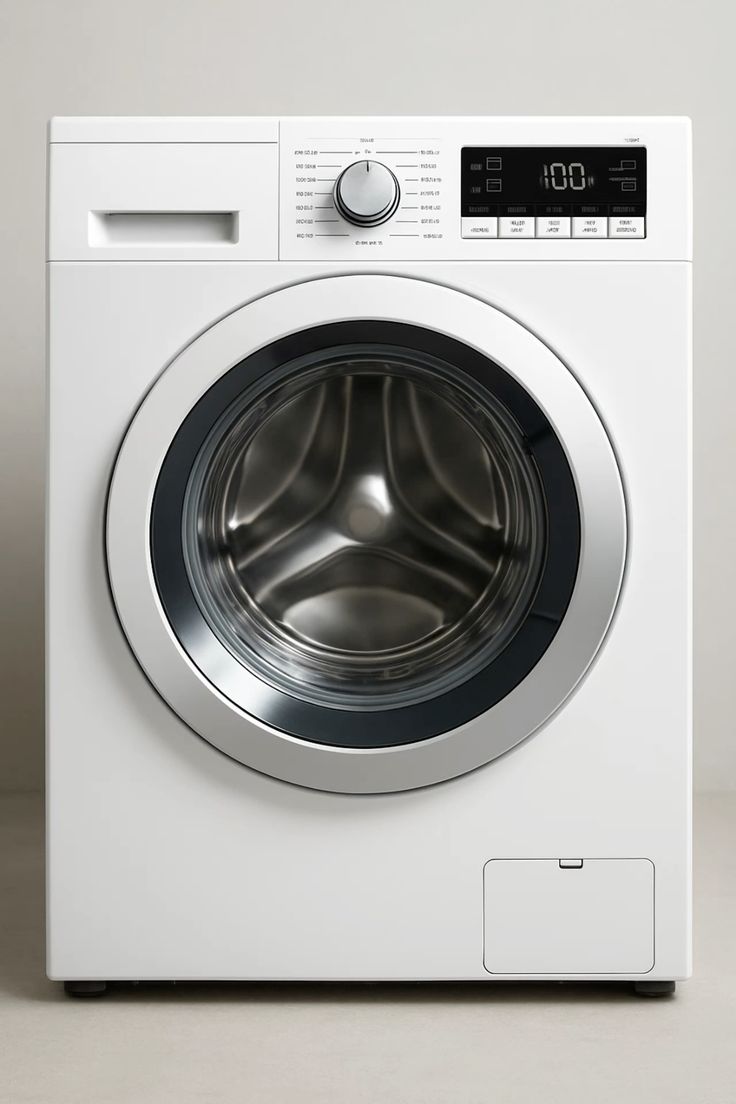
Take a household that wants to buy a washing machine retailing at KES 21,000. With a household income of about KES 50,000, buying it outright from a single month’s salary is nearly impossible. There are bills that must be paid regardless: rent, food, transport, school fees for the children. Even with a strict budget, setting aside KES 6,000 from that income in a single month would be a stretch.
This family essentially has two options for getting that washing machine:
• Borrow: through a chama loan, Lipa Mdogo Mdogo, or a Buy Now Pay Later (BNPL) plan. These are all forms of credit, so we’ll group them together.
• Save: set aside a little at a time until the full KES 21,000 is reached.
Each option comes with a trade-off. Borrowing gets the family the machine immediately, but they pay for that instant gratification through interest. Saving means continuing to hand-wash clothes a while longer, but it comes interest-free, and if the money is saved in an interest-bearing instrument, it actually grows while they wait.
The Rise of “Pay Little, Pay Often” in Kenya
Kenya has seen a rapid rise in consumer asset-financing frameworks. Historically, underbanked consumers with variable daily incomes faced real barriers to accessing modern digital resources, since traditional banking systems require formal credit scoring or upfront collateral. To close that gap, financial providers built consumer-oriented credit alternatives, commonly known as “Buy Now, Pay Later” (BNPL), “Lipa Mdogo Mdogo” (pay little by little), or “Lipa Pole Pole” (pay slowly).
These micro-repayment models have scaled fast. Industry projections suggest Africa’s broader BNPL sector will grow from USD 5.2 billion in 2025 to roughly USD 16.8 billion by 2031. In Kenya specifically, this has already become a USD 1.03 billion (roughly KES 133 billion) a year asset-financing industry, funding everything from motorcycles to smartphones to household goods at effective interest rates that can run from 80% to as high as 180% APR, multiples of the Central Bank Rate.
Why “Affordable” Daily Payments Aren’t as Cheap as They Look
Micro-installments of KES 50–100 a day are marketed as affordable. But once you actually analyze these payment streams, the picture changes: they often carry steep interest markups, largely because lenders need to price in default risk and currency depreciation.
To find the true cost of these agreements, you solve for the present value of the daily installment stream against the retail cash price minus the down payment. This reveals the implicit daily interest rate. From there, you can calculate the Nominal Annual Percentage Rate (Nominal APR) and the Effective Annual Rate (EAR).
We won’t walk through the formulas here, but the outcome speaks for itself: a device like the Tecno Pop 7, with a retail cash price of KES 11,000, accrues a total repayment of KES 22,764 when a customer pays a KES 3,000 deposit followed by KES 54 a day for 366 days. That works out to an Effective Annual Rate of 785.09%, more than double the cash price, just for the privilege of paying daily instead of upfront.
Running the Same Math on the Washing Machine
Applying that same EAR of 785.09% to our KES 21,000 washing machine, with a KES 6,000 deposit:
• Financed principal: KES 21,000 − KES 6,000 = KES 15,000
• Daily implicit interest rate: solving (1 + 7.8509) = (1 + r)^365 gives r ≈ 0.599% per day
• Daily installment (amortized over 366 days): KES 101.25
• Total installments paid: KES 101.25 × 366 days = KES 37,057.50
• Total repayment, including the deposit: KES 37,057.50 + KES 6,000 = KES 43,057.50
|
Item |
Amount |
|
Retail cash price |
KES 21,000 |
|
Total cost financed |
KES 43,057.50 |
|
Interest markup paid to the lender |
KES 22,057.50 |
In other words, financing the washing machine more than doubles its cost: a 105% markup over the cash price, paid out within a single year.
This isn’t unique to one product, or even to Kenya. BNPL has expanded rapidly across the continent, giving cash-strapped consumers access to phones, appliances, and other goods they otherwise couldn’t afford. But the growth has a darker side: Kenyan BNPL phone financing has drawn scrutiny for unclear terms, digital lockouts, and aggressive collection tactics, and devices have reportedly been remotely disabled after just two to four missed payments, sometimes without warning, a real risk for informal workers whose income depends on having a working phone.
The Alternative: Saving Together Toward a Goal
So what if there’s another way to get that washing machine, one that just calls for a bit of patience?
One partner creates a Group Goal on the Zedek app and names it “Washing Machine.” They invite the other partner, and together they save toward it. If each of them commits KES 100 a day (KES 200 combined), they’d reach the KES 21,000 target in roughly 3.5 months, and unlike the BNPL route, every deposit along the way earns interest instead of costing it.
Sources:
• Africa’s BNPL Boom Collides With Messy Reality Of Debt Collection, WeeTracker, June 2026.
• Split in four: the uneven geography of BNPL, The Paypers, May 2026.